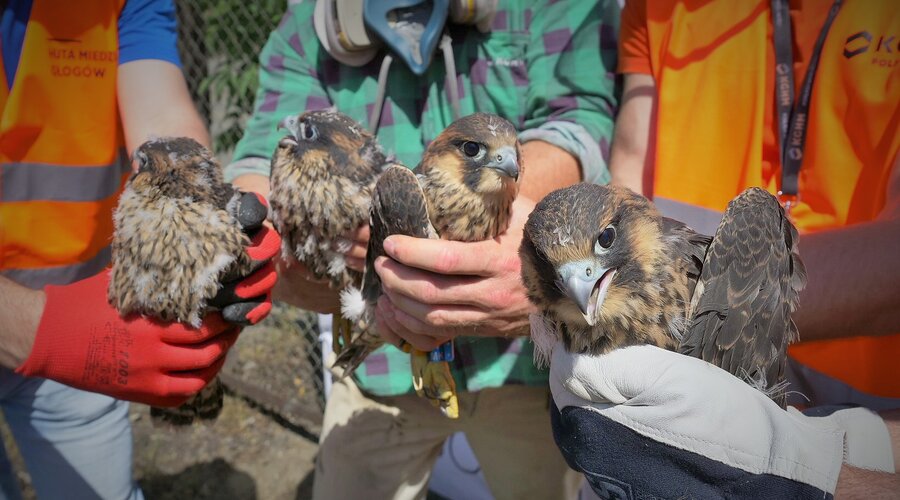
Young falcons from the KGHM Smelter’s stack waiting to be named
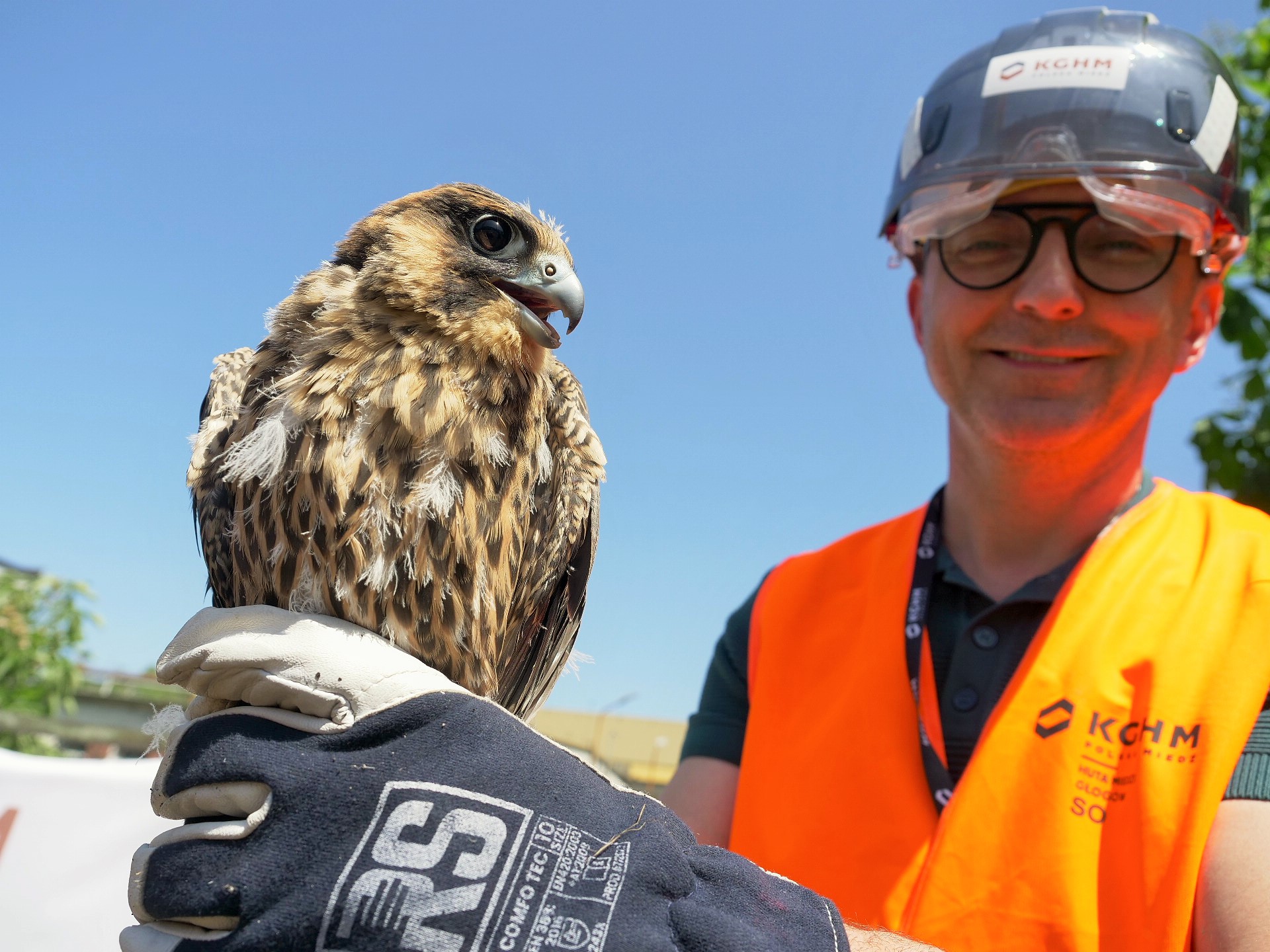
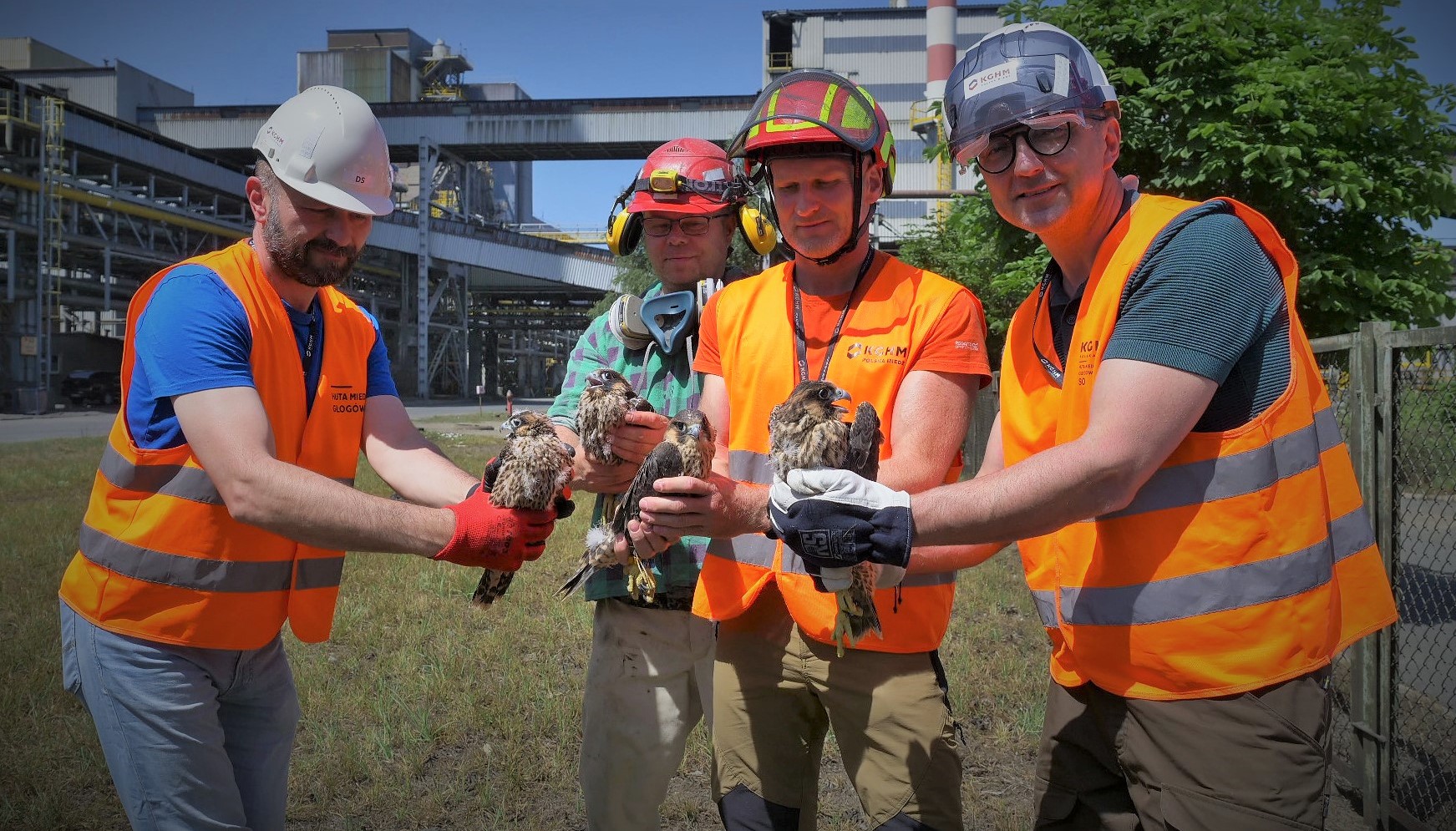
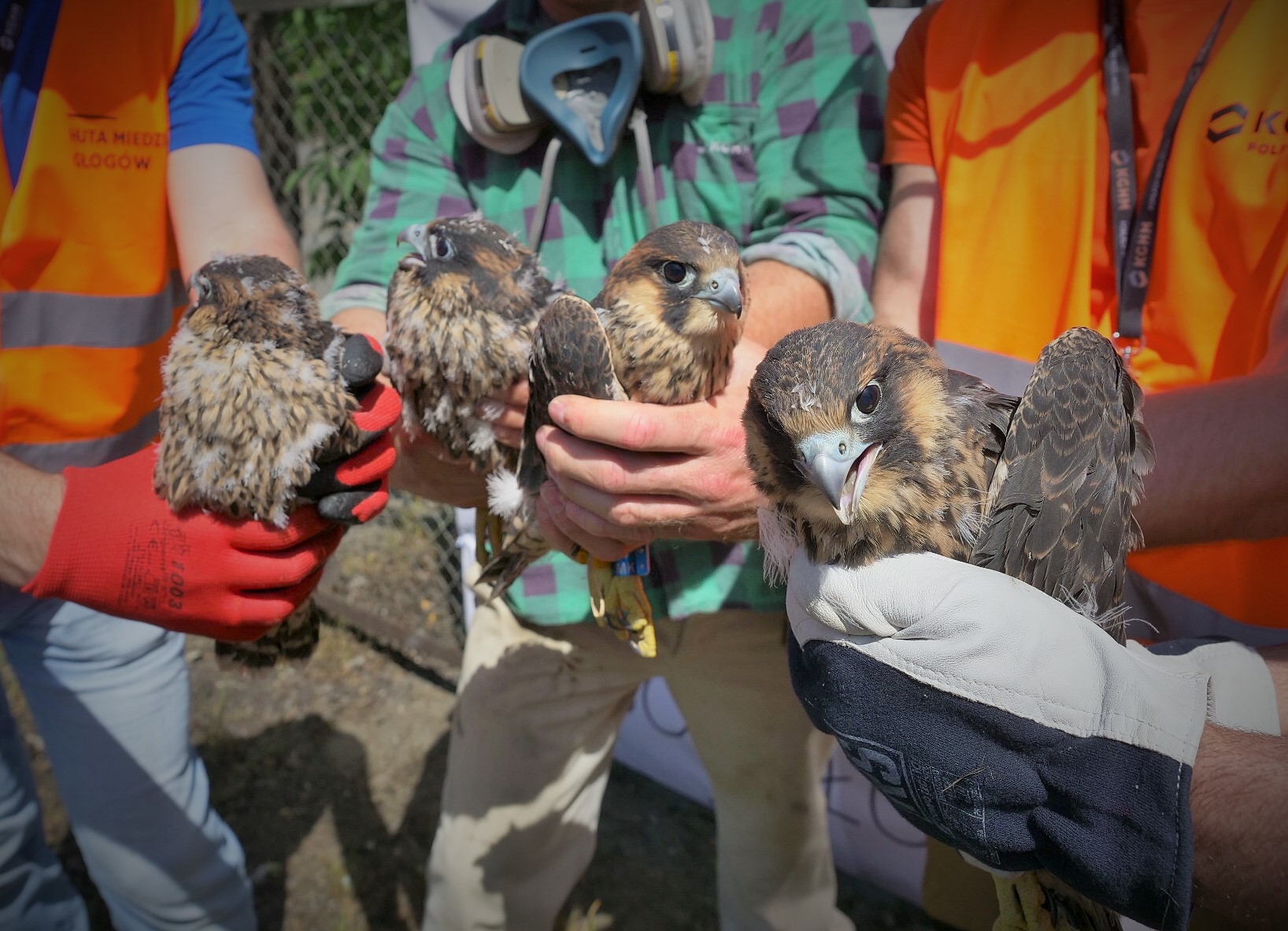
Four peregrine falcon chicks have just been ringed at the ‘Głogów’ Copper Smelter. There are only around 100 pairs of this species living in Poland. Part of this population consists of birds that hatched on the ‘Koniczynka’ smelter stack. The young falcons will soon be given names chosen by KGHM staff.
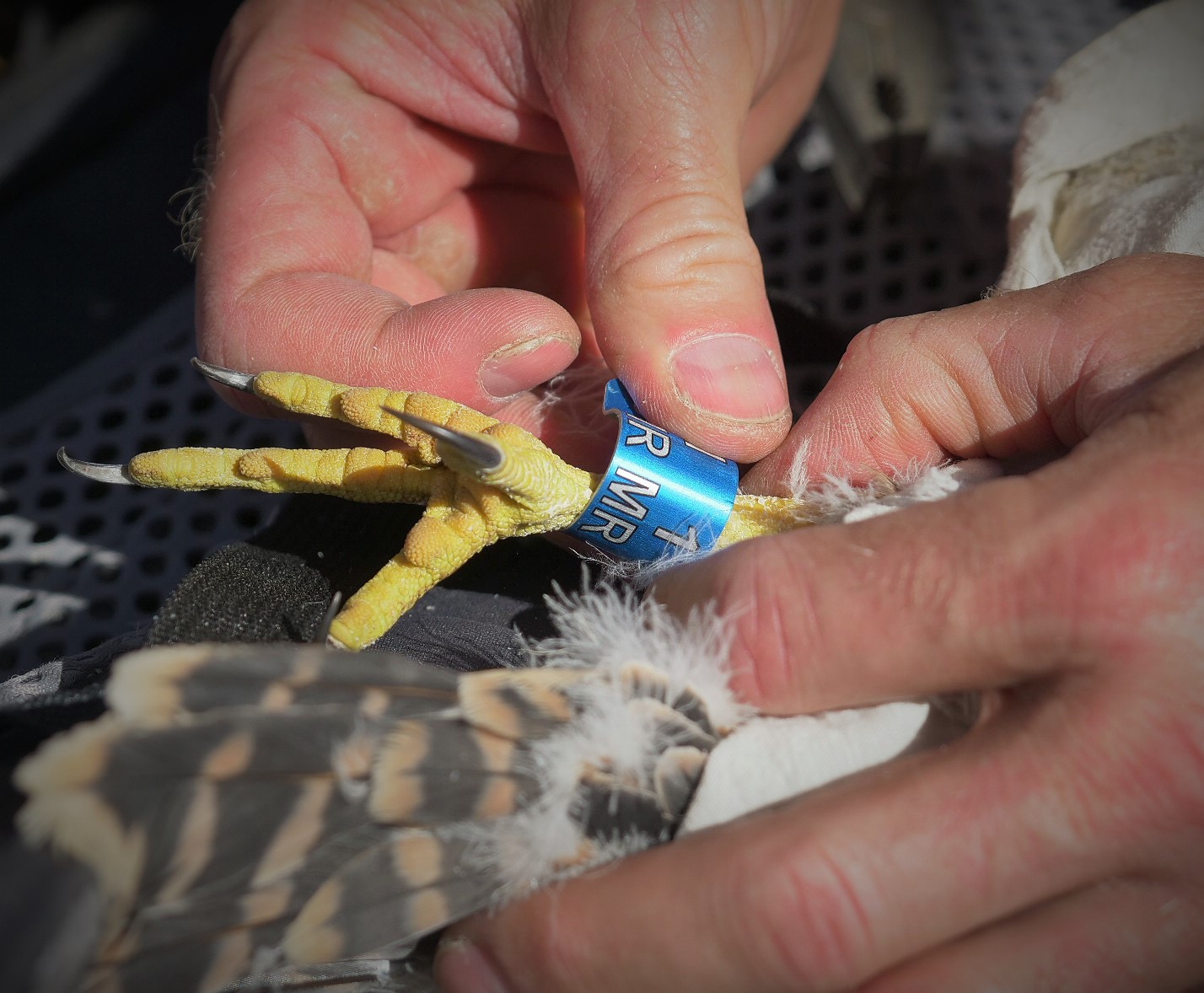
The ringing was carried out by representatives of the ‘Sokół’ Association for Wild Animals, with the support of KGHM volunteers and smelter staff. The chicks were each given two rings: a yellow one and a blue one. The first is an ornithological marking used for falcons nesting in urban and industrial areas. Blue rings, on the other hand, are used to identify wild birds that were born in the wild.
‘Bird ringing is an important moment not only for ornithologists, but also for everyone who has been involved in the conservation of peregrine falcons at the ‘Głogów’ Copper Smelter for many years. Thanks to such initiatives, it is possible not only to monitor the birds’ welfare, but also to provide tangible support for the restoration of their populations in Poland. It is no coincidence that the falcons like our smelter. This is fostered by the conditions surrounding the plant and its proximity to the Łęgi Głogowskie. ‘This is a vast area of 600 hectares of great ecological value that attracts many species of wildlife’, said Dariusz Matijczak, Chief Forestry Specialist at the Głogów Copper Smelter.
A safe haven for our falcons
This year, a pair of falcons – Luna II and Bosy – took up residence on the nesting platform and raised four chicks. This is further proof that the site of the foundry has remained a safe breeding ground for this protected species for years. Since the nesting platform was installed, 54 chicks have already been ringed. There are currently around 100 pairs of peregrine falcons living in Poland. The young birds that hatch at the Głogów Copper Smelter are helping to boost the national population of this rare bird of prey and confirm that the plant has remained a key site for its conservation for many years. The most famous falcon from Głogów was Giga, who nested on the Palace of Culture and Science in Warsaw.
Industry and nature in one place
The history of the falcons at the ‘Głogów’ Copper Smelter began in 2008, when the first nesting attempt was recorded. Once the nesting platform was installed, the first chicks hatched just a year later. The proximity to nature and the conditions around the facility proved to be ideal for rearing chicks.
Peregrine falcons are not the only wild animals living in the area around KGHM’s facilities. In these areas, you can also spot roe deer, badgers, hares, wild boars, foxes and red deer, and in the old river beds of the Oder, there are also otters and beavers. This area is also important for many species of birds, including kestrels, which often choose the foundry site as a breeding ground. Numerous nature conservation initiatives are carried out around KGHM’s sites, including annual tree-planting campaigns organised by volunteers to mark the World Earth Day.