


KGHM Polska Miedź: new investments at the Legnica Copper Smelter
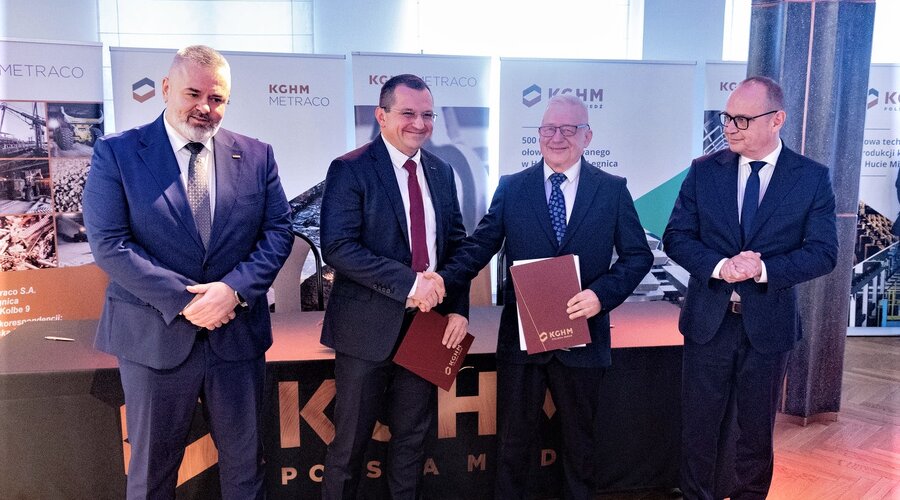
Legnica Copper Smelter, the oldest division of KGHM Polska Miedź S.A., has signed an agreement with KGHM Metraco S.A. to cooperate on the construction of a Scrap Trading Plant (STP). The planned project is a key element in the transformation of the plant from a hybrid smelter to a recycling smelter specialising in the recovery of copper scrap. The STP will be the first link in a modern supply chain for the Legnica Copper Smelter and will provide it with flexibility, security of feedstock supply and full control over the quality of raw materials. The smelter is also preparing to implement fixed pad cathode production technology. The planned investments are another example of KGHM's commitment to the development of a closed-loop economy.
The future of metallurgy
‘The planned construction of the Scrap Trading Plant is an important element of the development strategy of the Legnica smelter towards a recycling plant. Our goal is to align KGHM's smelting capacity with long-term trends in the non-ferrous metals market’, said Andrzej Szydło, President of the Management Board of KGHM Polska Miedź S.A. ‘In the coming decades, the amount of mined copper available on the global market will decline due to, among other things, depleting deposits and rising mining costs. However, copper can be recovered very efficiently and the amount of scrap material available will steadily increase. We see potential for smelting in recycling, so the transformation of our Legnica smelter is one of KGHM's most significant projects in this area’, he added.
As envisaged, the transformation of the Legnica Copper Smelter into a recycling smelter will have a positive impact on the labour market in the city and surrounding area. The investments made will also guarantee the stable operation of the smelter over the next decades, making it a modern and environmentally friendly production facility. A key element of the planned investments is the involvement of KGHM Group companies, including, among others, KGHM Metraco, which specialises in the acquisition, classification and logistics of non-ferrous metal scrap.
New technology
Active preparations are underway at the Legnica Copper Smelter to implement a modern cathode production technology using the fixed pad method. It will not only enable a reduction in production costs, but will also improve working conditions at the Electrorefining Department. The new method will make it possible to replace the classic disposable starting pad with a modern, acid-resistant reusable steel die. The selected technology is being used in newly designed metallurgical plants around the world.
The application of the fixed pad technology at the Legnica Copper Smelter's Electrorefining Department will increase its production capacity. The project also includes the installation of new equipment and installations in the existing bath halls and the modernisation of the Electrolyte Treatment Plant system. The project is scheduled for completion in 2026.